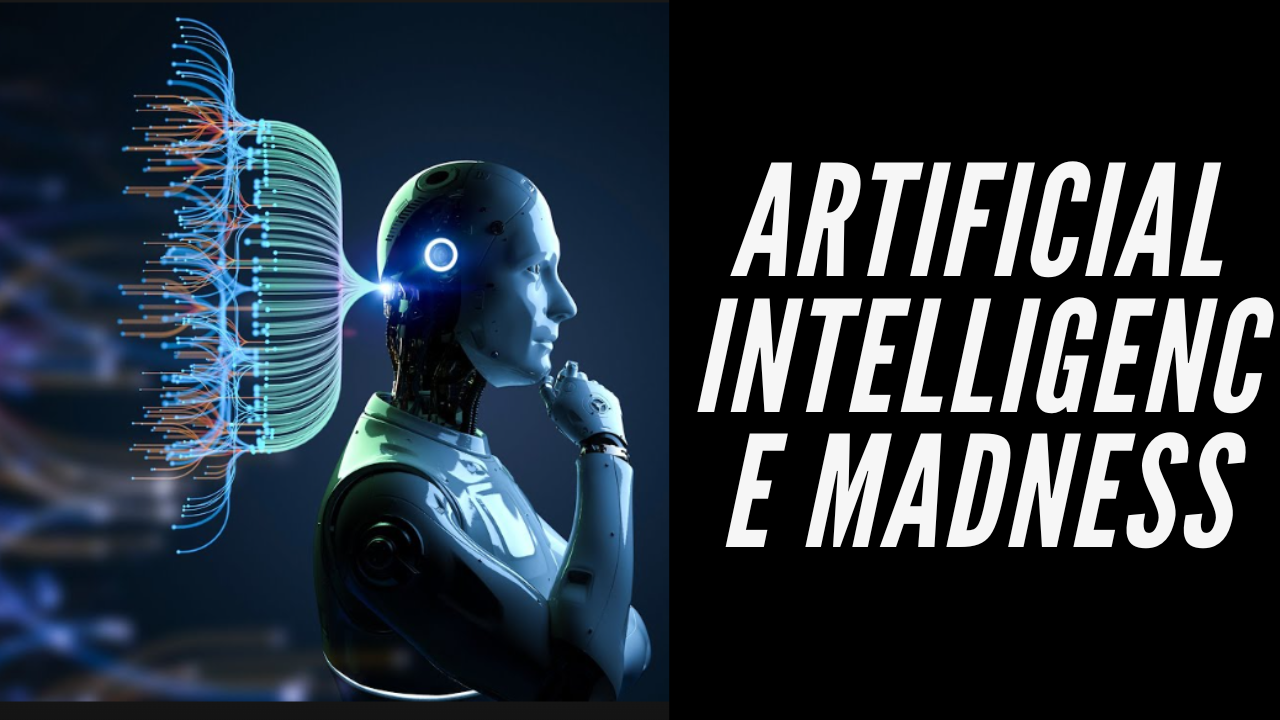
Within a few years, artificial intelligence (AI) will undoubtedly transform from a mere assistive technology into a pervasive force, reshaping investor expectations. With each announcement of a new partnership or segment, linguistic trends and capabilities accelerate, and information rushes to a sector seen as the inevitable future of the global economy. But this massive influx of funds is accompanied by equally compelling questions: Is this a real boom, or just a hype that will quickly fill the airwaves?
Despite the media frenzy and the healthy competition among companies, economic analysts are focusing on indicators that, in their view, are merely precursors to financial stocks. Large-scale models are becoming increasingly expensive and complex, and are beginning to seek the label “artificial intelligence” to describe them, while investments pile up in projects that have yet to demonstrate their ability to generate impressive returns. This chaos brings to mind an old, yet ever-relevant, question: When will it truly take off?
Amidst widespread optimism and growing skepticism, economic and technological experts are examining the pivotal path of AI. History tells us that major revolutions typically begin with a great deal of noise before the true value is realised. Today, artificial intelligence (AI) appears to be at that pivotal moment when the alliance is faltering.
“Bubble Fears”
In this context, a Business Insider report points to growing market fears of a repeat of the 1999 crisis (the dot-com bubble) in the current technology investment landscape. While there is much debate about whether AI is experiencing a financial bubble, specific historical indicators stand out that investors should pay attention to.
The report quotes Goldman Sachs analysts as saying they believe the current AI frenzy could bring back memories of the dot-com bubble bursting at the turn of the millennium.
Dominic Wilson, senior advisor in global markets research, and Vicky Chang, macro research strategist, explained in a note to clients on Sunday that stocks are “still a long way” from the 1999 moment, but signs of similarity to the pre-burst era are increasing.
The memo stated: “We see growing risks indicating that the imbalances that accumulated in the 1990s may begin to surface as the AI investment boom expands. We have recently witnessed echoes of the tipping point that preceded the bursting of the 1990s bubble,” noting that the current trading trajectory of AI stocks resembles the state of the technology in 1997, years before the crash.
For his part, Dr. Ahmed Banafa, an AI and digital transformation expert at San Jose State University in California, told Sky News Arabia:
“The AI frenzy has already reached its media and investment peak.
The world is currently experiencing a phase very similar to the dot-com bubble of the early 2000s, with investments pouring into every AI-branded project, even those lacking a clear business model.
Many companies are chasing the AI wave driven more by fear of missing out (FOMO) than by a genuine desire for tangible results or economic value.
Many of these projects have yet to generate returns that justify the massive investment on infrastructure, processing power, and data.”
He explains that ambitions in the sector are high, but “the results so far have fallen short of expectations.” After the hype surrounding the launch of giant language models like ChatGPT, Cloud, and Gemini, the qualitative improvement in model performance has slowed. They are no longer becoming smarter, but rather larger, with increasing challenges related to accuracy, hallucinations, and security.
Banafa continues, saying that “some companies are beginning to feel the financial burden of running these models due to their high energy and computing consumption. This is pushing the market to shift from quantitative expansion to qualitative thinking—that is, how to improve efficiency instead of simply increasing size.”
However, he points out that “despite the waning enthusiasm, the AI wave is not over yet,” explaining that developments in analog and quantum AI chips are still in their early stages, and that industrial, educational, and medical applications have not yet reached their full potential.
Banafa asserts that “artificial intelligence has reached a turning point just before maturity,” indicating that while the media hype may subside, the technological revolution will continue at a more pragmatic pace, ushering in a phase of “the end of hype and the beginning of practical application,” where exaggerated promises fade and truly game-changing applications emerge.
Predicting Bubbles
A Brookings report notes that “predicting financial bubbles is notoriously difficult. From the peak of Dutch tulip prices in 1636 and 1673, to the stock market boom of the late 1920s that ultimately led to the Great Depression, or the dot-com bubble of 2000, bubbles have often taken people by surprise.