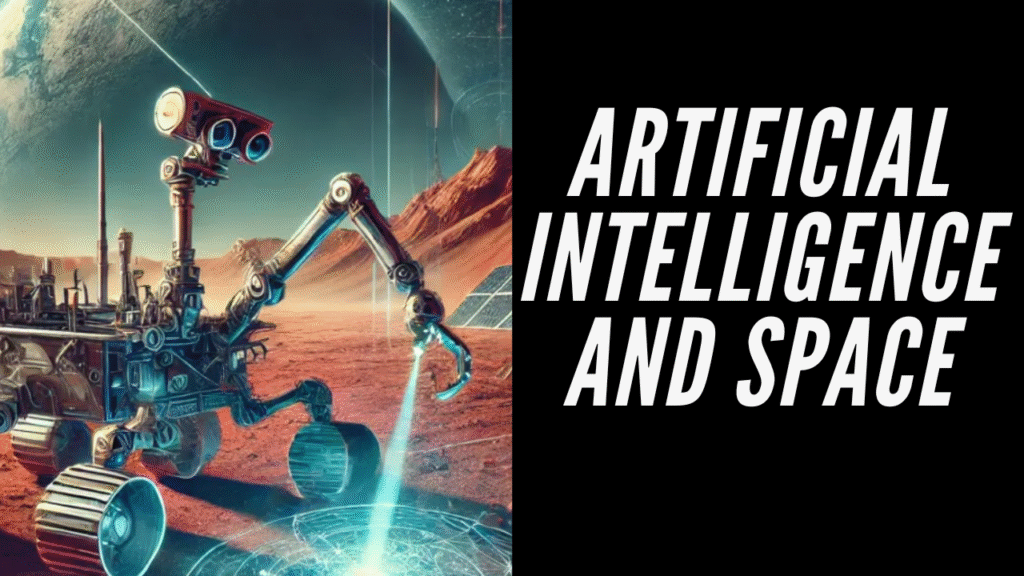
As the race for artificial intelligence accelerates and the demands for massive processing power rise, major technology companies are beginning to explore solutions that extend beyond Earth itself.
With increasing pressure on digital infrastructure, thinking is gradually shifting towards unconventional spaces capable of accommodating the current and future surge in demand.
This shift in technological mindset is based on a growing conviction that the terrestrial environment, with its limitations, congestion, and scarce resources, may not be sufficient to support the next generation of high-performance computing. Consequently, the concept of “space” is moving beyond the realm of pioneering research into the operational plans that giant corporations are increasingly considering.
With the growing discussion of digital infrastructure built beyond Earth’s atmosphere, attention is turning to projects that promise to usher in a new era in the data industry, leveraging the stable energy, cold environment, and unlimited scalability of orbit. As this race takes shape, questions are mounting about the feasibility of these ventures and their role in addressing the technological challenges that are escalating at an unprecedented pace.
According to a report in The Wall Street Journal, the “energy constraints” in the artificial intelligence race are pushing tech companies to think outside the box.
The report explains that tech giants, including Tesla and SpaceX CEO Elon Musk, Amazon founder Jeff Bezos, and Google CEO Sundar Pichai, “have all talked about AI-powered data centers on the moon and in orbit, which could provide stable solar power with fewer regulatory hurdles.”
The demand for electricity is soaring, driven by artificial intelligence and the booming construction of data centers.
Some warn that the US power grid cannot keep up with this demand.
A Promising Environment for Innovation
Dr. Ahmed Banafa, an expert in artificial intelligence and digital transformation at San Jose State University in California, told Sky News Arabia:
“Space is no longer just a field for scientific research; it has become a promising environment for innovation.”
There are natural factors that cannot be ignored, most notably the pure and continuous solar energy, which can be harnessed far more efficiently than on Earth thanks to the absence of an atmosphere, in addition to the cold space environment that reduces the need for energy- and water-intensive cooling systems.
“Eliminating the constraints of terrestrial infrastructure, high land prices, and environmental regulations makes space a flexible and practical option for expanding data processing capabilities.”
He adds: “For example, we are witnessing significant progress in this direction today.” Starcloud, indirectly backed by Nvidia, is developing orbiting data centers powered entirely by solar energy, promising significant reductions in electricity consumption.
He continues, “Even Google has entered the fray with Project Suncatcher, which is exploring the construction of a satellite network dedicated to cloud computing and artificial intelligence, supported by high-speed communication technologies connecting space and Earth.”
Despite the immense potential, Dr. Banafa points out that the path ahead remains fraught with challenges:
The cost of launching into space remains high.
Maintenance and modification after launch are virtually impossible.
Low latency poses a significant obstacle for some sensitive applications.
Issues of digital sovereignty and “who owns digital space” still await a clear legal framework.
He concludes, “It’s clear that we are on the cusp of a new era in data center architecture.” Space-based facilities will not completely replace terrestrial ones, but they will be a crucial complement, especially for tasks requiring immense processing power or greater environmental sustainability.
As space launch technologies accelerate and their costs decrease, we expect to see the first operational data centers in orbit this decade, paving the way for what we might call the space cloud, which could become the backbone of the next generation of artificial intelligence applications.
It is believed that “everyday artificial intelligence is not only changing the shape of technology but also the infrastructure upon which this technology depends, driving innovation to horizons unimaginable just a few years ago. The race to extraterrestrial data centers is no longer science fiction but a reality in the making.” Rapid Growth
According to a report by the World Economic Forum:
Artificial intelligence is experiencing rapid growth, as is the demand for the energy needed to develop it, which could increase by 50 percent annually until 2030.
Starcloud has developed a space-based solution, as CEO Philip Johnston explains: building data centers in orbit, where they will have unlimited access to energy. The Sun and Space Cooling Capabilities
With the growing demand for AI power, a leading startup is working to move data infrastructure off Earth. Starcloud is building space-based data centers to harness the abundant, continuous solar energy available in orbit.
Space-based infrastructure supports AI development on a large scale. Unlike on Earth, where data centers face space and energy constraints, orbital centers can expand up to 50 times. These modules, each the size of five shipping containers, combine to form massive, solar-powered structures, measuring 4 kilometers by 4 kilometers, with radiators extending 1 kilometer in length, according to the forum.
Moreover, space-based data centers reduce environmental impact. While the initial launch has an environmental cost, over time, these data centers emit 10 times less carbon dioxide than terrestrial centers powered by fossil fuels. They also contribute to land conservation by eliminating the need to cover forests and fields with solar panels.
In addition to supporting artificial intelligence, the vacuum and cold of space provide ideal conditions for quantum computing—eliminating the need for energy-intensive cooling on Earth.
A Global Race
A professor of computer science and an expert in artificial intelligence and information technology in Silicon Valley, California, says:
What we are witnessing today is not just a future discussion, but the beginnings of a real global race led by giant technology companies, driven by two main factors: the energy crisis and the ever-increasing demands of artificial intelligence.
Terrestrial data centers are projected to consume nearly 10 percent of the world’s electricity by 2030, and according to estimates, massive language models and power generation systems will make this figure potentially explode.
He emphasizes that “the real challenge for companies like Microsoft, Google, and Amazon is no longer developing algorithms, but how to secure the energy to run them,” explaining that cheap and clean energy is becoming scarce, and government regulations are beginning to impose limits on energy and water consumption for data centers. This has led to a shift towards small nuclear power plants, hydrogen power plants, and now, space.
Why Space?
According to Al-Omari, there are three reasons why the idea of data centers outside Earth’s atmosphere makes economic and technological sense:
First: Infinite solar energy
Second: The absence of cooling costs
Third: A silent economic and military race (particularly with China and the United States)
However, it also presents “enormous challenges” that could delay this future, the most important of which are:
The enormous cost of launching hundreds of tons of equipment
The problem of maintenance and repair in orbit
The danger of space debris